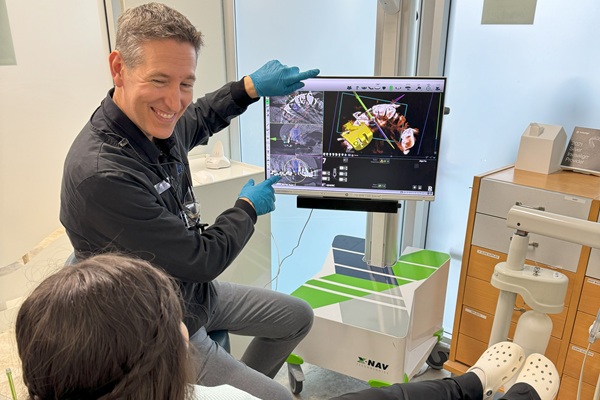
Dentists who use 3D dental X-rays can diagnose and treat oral health conditions more accurately. This advanced technology allows dentists to make a more precise diagnosis and, as a result, prescribe more effective treatments. Thanks to 3D dental X-rays, dentists can make more accurate decisions that lead to better patient outcomes.
Overview of 3D dental X-rays?
These X-rays use advanced imaging technology to capture detailed, three-dimensional images of the teeth, jaw, and surrounding tissues. This is made possible by a special scanner known as a cone-beam computed tomography (CBCT) device. Traditional X-rays provide only a single-angle view. However, 3D dental X-rays produce rotating, comprehensive images, allowing dentists to see a patient's dental anatomy from multiple angles. The images are captured in just a few seconds with a minimal amount of radiation, making the process quick and comfortable for patients.
Improved accuracy in diagnosis
Traditional X-rays may only provide a limited view of a patient's dental anatomy. This view can be incomplete and miss key details, leading to a less accurate diagnosis. For instance, a dentist may overlook an issue with the tooth's root or bone structure because traditional 2D X-rays do not provide the clearest picture of these areas.
Fortunately, a dentist can use a 3D X-ray machine to ensure they gather all the information they need. The 3D dental X-rays give dentists a complete view by showing oral structures from multiple angles. This view helps providers spot dental issues in greater detail. For example, when diagnosing issues like root canal infections, 3D imaging can show cracks or damage to the surrounding tissues and structures a traditional X-ray may miss. Dentists can use this technology to gain more detailed information, which can lead to greater treatment accuracy.
Improved treatment planning
3D dental X-rays help create more precise and customized plans. This is especially important for complex dental procedures such as dental implants, tooth extractions, and oral surgery. For example, when planning dental implant placement, 3D dental X-rays help determine the correct placement for the implant so that enough bone will support it and align correctly with the rest of the teeth.
Additionally, the 3D images help dentists assess surrounding tissues and structures, such as nerves and blood vessels, which can be vital in procedures such as wisdom tooth extractions. The clear three-dimensional view helps a dentist preserve these critical structures during treatment. Because the dentist can avoid these structures more easily, they reduce the risk of damaging them. When a provider understands the exact layout of the patient's oral structures, they can plan the treatment with greater accuracy, improving the overall success rate of procedures.
Faster and more efficient treatments
3D dental X-rays help speed up the treatment process by providing clear, detailed images right away. With the more accurate images this technology provides, dentists can make faster, more informed decisions. This can mean fewer tests or follow-up appointments, saving both time for the patient and the dental team by allowing the dentist to address several dental concerns in just one visit.
Additionally, the level of detail provided by 3D X-rays can benefit patients by making it possible to avoid more invasive treatments. For instance, when a dentist is trying to decide if a tooth needs extraction, the dentist can use the 3D X-ray to determine a less invasive option, such as a root canal. This is a significant benefit to the patient as it can lead to a faster recovery time and less discomfort for the patient.
Safer and more comfortable for patients
3D dental X-rays are safer and more comfortable for patients compared to traditional methods. Traditional X-rays can often be uncomfortable for a patient because they require the patient to remain still for a longer period of time. However, 3D dental X-rays are completed quickly—in just a few seconds—minimizing patient discomfort as well as the patient's exposure to radiation. The amount of radiation used in 3D dental X-rays is also much lower than that of traditional CT scans, making them a safer option for patients as well.
A valuable tool for better dental care
3D dental X-rays have greatly improved the way dentists approach patient care. 3D dental X-rays are essential for modern dentistry because they enable faster and more efficient procedures and increase patient safety and comfort. As technology continues to improve, this technology will undoubtedly remain an indispensable tool for providing the best possible oral health care. To learn more about how advanced dental technology can benefit your dental care, call us today.
Request an appointment here: https://www.diamondheaddentalcare.com or call Diamond Head Dental Care at (808) 450-2101 for an appointment in our Honolulu office.
Check out what others are saying about our dental services on Yelp: Dental Cleaning and Examinations in Honolulu, HI.
Recent Posts
If you are overdue for a deep teeth cleaning or have periodontal disease, you may benefit from an in-depth dental cleaning. Officially known as root scaling and planing, deep cleanings are a more extensive form of deep teeth cleaning. It involves removing tartar and plaque from gum pockets and teeth roots. Dental cleanings serve mainly…
Regular teeth cleaning is important not only for oral health but also overall health. While many people may schedule regular doctor appointments, they may forget about dental care. However, routine teeth cleaning is critical and just as important as a physical wellness exam.There are many diseases that stem from bacteria and other harmful things which…
Most people grow up believing certain myths about dental checkups. Online information can also be misleading when it comes to dental healthcare. As innovations in dental health continue to surface, most of these falsities are debunked. Below are some of the common dental checkup myths and the truth behind each of them.Fact: Firm or medium-bristled…
Every six months, you should have a dental checkup. During each visit, a hygienist cleans the patient’s teeth. Then, a dentist looks for any potential or existing problems. The main goal is to correct an issue before it worsens. That way, you enjoy healthy teeth and gums from one appointment to the next. Keep reading…